The Financial Basics Most People Were Never Actually Taught
Have you ever found yourself thinking:
“I wish someone had taught me this when I was younger.”
If so, you’re not alone.
(more…)
Have you ever found yourself thinking:
“I wish someone had taught me this when I was younger.”
If so, you’re not alone.
(more…)
Recently, my partner and I started watching The Madison with Kurt Russell.
In the first episode, there’s a story that really stuck with me.
He talks about taking his family to an all-inclusive resort and noticing that most of the people there were about twenty years older than they were. The point wasn’t about age itself. It was about something much deeper.
(more…)
There’s a phrase I hear often lately:
“I want to save… but everything already feels expensive.”
And honestly, that feeling is understandable.
Between groceries, housing costs, interest rates, childcare, transportation, and everyday life, many people feel stretched thin — even when they’re working hard and doing everything “right.”
Because of that, saving money can sometimes feel overwhelming. Or impossible.
But I want to gently offer a different perspective:
Saving doesn’t have to start big to matter.
At YourStyle Financial, we often remind people that financial progress is usually built through small, consistent steps — not dramatic overnight changes.
The Pressure to “Do More”
One of the biggest reasons people avoid saving is because they think they need to start with large amounts.
A few hundred dollars a month.
A perfectly organized budget.
A full financial plan already figured out.
But that pressure can actually stop people from starting at all.
The truth is:
Even setting aside a modest amount regularly can begin building confidence alongside savings.
Start With an Emergency Fund
Before focusing heavily on investing, many people benefit from first building a small emergency fund.
Think of it as a financial buffer zone for when life gets difficult.
Unexpected car repairs, appliance breakdowns, medical expenses, reduced work hours — these things happen. And when there’s no cushion in place, even small emergencies can quickly turn into stress or debt.
An emergency fund doesn’t need to be huge to be helpful.
Even starting with a small goal can create peace of mind and breathing room over time.
Pay Yourself First
One of the simplest — and most effective — saving strategies is something called “pay yourself first.”
Instead of waiting until the end of the month to save whatever might be left over, you move money into savings as soon as you get paid.
Why does this matter?
Because for most people, there often isn’t leftover money at the end of the month.
Automating savings, even in small amounts, helps remove the pressure of constantly making the decision manually.
That might look like:
Consistency is usually more important than the amount itself.
Track Where Your Money Is Actually Going
Sometimes the challenge isn’t income alone — it’s money quietly leaving without us noticing.
Subscription services are a great example.
Streaming platforms, unused memberships, apps, delivery services, or recurring charges can slowly add up over time, especially when multiple small expenses are combined.
Taking time to review your monthly spending can help identify:
This isn’t about guilt or restriction.
It’s simply about making sure your money is going where you actually want it to go.
Why a TFSA Can Be a Great Starting Point
For many Canadians, a Tax-Free Savings Account (TFSA) is one of the most flexible ways to begin saving.
A TFSA allows:
That flexibility matters when life feels unpredictable.
Whether you’re saving for:
A TFSA can create room for future choices without locking your money away.
Saving Is Emotional Too
This part matters more than most people realize.
Saving money isn’t only about math.
It’s also about:
Even small savings can create emotional breathing room.
And sometimes, that’s where the biggest shift begins.
You Don’t Need to Be Perfect to Start
One of the most common things I hear is:
“I should have started sooner.”
Maybe. But that thought doesn’t help you move forward today.
What matters most is simply beginning from where you are now.
No judgment.
No perfection required.
No “right” timeline.
Just thoughtful steps that fit your life.
A Simple Question to Ask Yourself
Instead of asking:
“How much should I be saving?”
Try asking:
“What amount could I save consistently without creating more pressure?”
That answer is often a much healthier place to begin.
And over time, small consistent habits can grow into something meaningful.
If you’d like help creating a plan that feels realistic for your life today, I’m always happy to have a conversation.
— Samantha
For many people, financial planning feels like something they should do “once things are more organized.”
Maybe after:
Until then, it’s easy to feel like you’re not quite ready.
But the reality is, most people don’t begin financial planning because they have everything figured out. They begin because they want clarity about what comes next.
And that’s exactly where good financial planning should start.
Financial Planning Isn’t About Being Perfect
One of the biggest misconceptions about working with a financial advisor is the idea that you need to arrive fully prepared.
You don’t.
You don’t need:
Financial planning isn’t about proving you’ve done everything right. It’s about understanding where you are today and creating a path forward that supports what’s important to you.
That process starts with a conversation — not perfection.
Why So Many People Delay Financial Planning
For some, it’s uncertainty.
For others, it’s intimidation.
Many people worry they’ll feel judged for:
Others simply feel overwhelmed by the amount of information online and don’t know where to begin.
These concerns are more common than you might think.
The truth is, financial planning should reduce stress — not add to it.
The First Step Is Often Simpler Than Expected
At YourStyle Financial, planning begins by understanding the person, not just the numbers.
That means conversations around:
There’s no expectation to have everything mapped out before reaching out.
Often, clarity develops gradually through thoughtful conversations and small, manageable steps.
Progress Matters More Than Timing
Many people assume they’ve waited too long to start planning.
In reality, building momentum is often more important than starting perfectly.
Small decisions made consistently over time can create meaningful long-term change:
Financial planning doesn’t need to happen all at once.
It’s a process of building confidence and understanding over time.
A Comfortable Approach to Planning
Everyone approaches financial decisions differently.
Some people want detailed explanations and regular meetings. Others prefer a quieter, more gradual process with time to reflect before making decisions.
There’s no single “correct” way to approach planning.
A good financial advisor understands that comfort matters. The process should feel approachable, collaborative, and aligned with your personality — not rushed or overwhelming.
Especially for individuals or couples who are naturally more introverted or thoughtful, having a calm and supportive planning experience can make all the difference.
What’s Important to You?
At the centre of financial planning is a simple but important question:
What’s important to you?
Not what someone else is doing.
Not what social media says you should prioritize.
Not what feels urgent in the moment.
Just you.
Whether your focus is:
Financial planning should support those goals in a way that feels manageable and meaningful.
You Can Start Before You Feel “Ready”
Most people don’t begin financial planning because they suddenly feel fully prepared.
They begin because they want guidance, clarity, and a better understanding of where they’re headed.
You don’t need to have everything figured out before starting that conversation.
If you’ve been thinking about planning but weren’t sure if it was the “right time,” that’s okay.
Sometimes the best first step is simply having a place to start.
If you’d like to talk through your situation in a calm, no-pressure environment, you’re always welcome to reach out.
– Sean
It’s something I hear often:
“At least my money is safe in the bank.”
And I understand where that comes from.
There’s comfort in knowing your savings aren’t going up and down with the markets.
But what’s often missed is this:
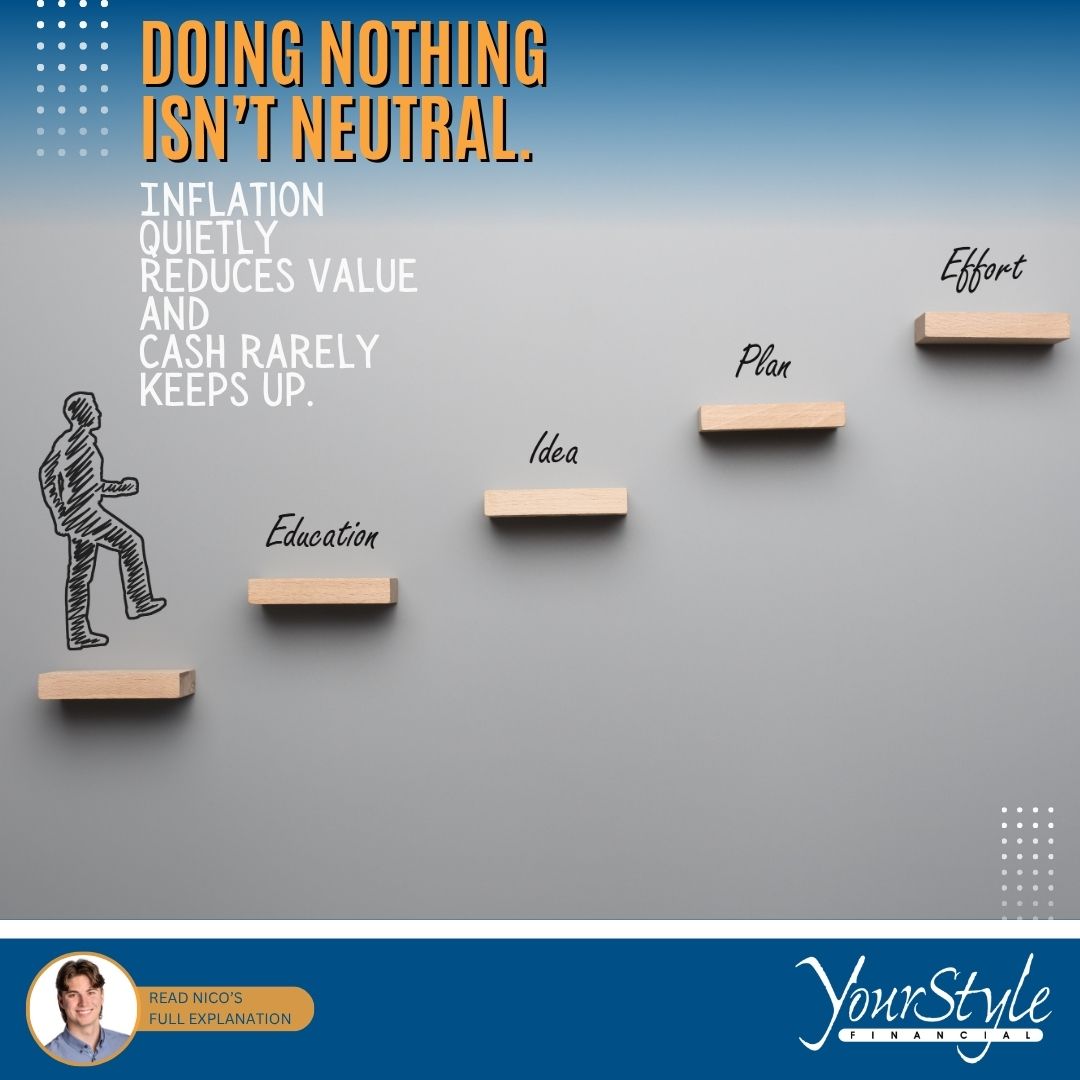
Doing nothing with your money isn’t neutral.
Over time, it can quietly cost you more than you think.
Inflation Is Always Working in the Background
Even when inflation feels “low” — say 2–3% — it’s still reducing what your money can actually do for you over time.
A simple way to think about it:
Nothing dramatic happens overnight.
But over years, the difference becomes meaningful.
The Opportunity Cost of Staying in Cash
Keeping money in a savings account might feel like the safest choice — but there’s a trade-off.
Historically:
That gap matters more than most people realize.
Here’s a simple example:
That’s not about taking unnecessary risk — it’s about understanding what happens when money doesn’t grow.
Time Is the Most Valuable Asset You Have
One of the biggest advantages anyone can have financially is simply starting earlier.
Even small amounts can make a significant difference over time.
To put this into perspective, here’s an example assuming a 7% annual rate of return over the long term:
Example:
Scenario A: Start Small, Then Increase Later
Results:
Scenario B: Wait, Then Invest More
Results:
These are hypothetical examples for illustration purposes, and actual returns will vary.
Even though the contributions are similar, the earlier start leads to a noticeably different outcome.
Not because of how much was invested — but because of time.
It’s Not About Taking Big Risks
This isn’t about putting everything into the market or making aggressive decisions.
It’s about balance.
For many people, the biggest risk isn’t volatility — it’s falling behind quietly without realizing it.
Final Thoughts
If your money is sitting in a savings account, you’re not doing anything wrong.
But it’s worth asking:
Is this working as well as it could for me?
Financial planning isn’t about pressure or quick decisions.
It’s about understanding your options and making choices that feel right for you.
If you ever want to talk it through — even just as a second opinion — I’m always happy to listen.
For many people, financial planning comes with a quiet hesitation.
Not because they don’t care — but because they’re unsure if they’re “ready.”
You might feel like:
Those thoughts are more common than you might expect.
But financial planning isn’t about where you “should” be. It’s about where you are — and what matters to you moving forward.
There’s No Perfect Starting Point
One of the most common misconceptions about financial planning is that you need to have everything in order before you begin.
In reality, there is no perfect starting point.
Some people come in with detailed plans and spreadsheets. Others come in with questions, uncertainty, or simply a sense that it’s time to start thinking about things differently.
Both are completely valid.
Financial planning should begin with understanding — not expectations.
A Different Kind of Conversation
At YourStyle Financial, the process doesn’t start with numbers.
It starts with a conversation.
There’s no pressure to have the “right” answers.
The goal is to create a space where you can talk openly, without feeling judged or evaluated. From there, clarity tends to follow naturally.
Progress Over Perfection
It’s easy to feel like financial decisions need to be perfect.
But most of the time, progress matters more.
Small, thoughtful steps taken consistently tend to have a greater impact than trying to get everything exactly right all at once.
Financial planning isn’t about fixing the past. It’s about creating a path forward that feels steady and manageable.
A Pace That Feels Comfortable
Everyone approaches planning differently.
Some people like detailed conversations and regular check-ins. Others prefer a quieter, more gradual approach.
There’s no single “right way” to plan.
For many, especially those who are more private or reflective, it’s important that financial planning happens at a pace that feels comfortable — without pressure or urgency.
The process should adapt to you, not the other way around.
What’s Important to You?
At the centre of financial planning is a simple question:
What’s important to you?
Not what the market is doing.
Not what someone else is prioritizing.
Not what you feel like you “should” be doing.
Just you.
Whether that means:
The role of financial planning is to support those priorities in a way that feels clear and achievable.
A Place to Start — Without Pressure
If you’ve been thinking about financial planning but haven’t been sure where to begin, that’s okay.
You don’t need to have everything figured out.
You don’t need to be at a certain stage.
You don’t need to feel “ready.”
If you’d like to have a conversation about where you are and where you’d like to go, you’re always welcome to reach out.
No pressure — just a place to start.
Getting married is an exciting step — one that comes with new conversations, shared goals, and a future you’re beginning to shape together. Alongside planning a wedding or settling into life as a couple, many people start thinking about finances and wonder where to begin.
(more…)Part 7 of 7 | Financial Wellness Series
In the final episode of our Financial Wellness Video Series, Doug Buss, founder of YourStyle Financial, joins Rafiq Punjani from Right at Home to discuss how thoughtful tax planning can help families keep more of what they’ve earned — while also supporting the causes that matter most to them.
(more…)
Part 6 of 7 | Financial Wellness Series
In the sixth installment of our Financial Wellness Video Series, Doug Buss, founder of YourStyle Financial, joins Rafiq Punjani from Right at Home to discuss one of the most important questions private caregivers can ask:
👉 “What are the signs we should look for that might signal concern?”
Part 4 of 7 | Financial Wellness Series
In the fourth episode of our Financial Wellness Video Series, Doug Buss, founder of YourStyle Financial, joins Rafiq Punjani from Right at Home to talk about how to provide meaningful support for elders who are beginning to need help — while maintaining their independence, confidence, and dignity.
(more…)
Part 1 of 7 | Financial Wellness Series
In this first installment of our Financial Wellness Video Series, Doug Buss, founder of YourStyle Financial, sits down with Rafiq Punjani from Right At Home to talk about the real financial challenges adults — especially retirees — are facing today.
With inflation driving up the cost of everyday goods and services, many Canadians living on a fixed income are finding it increasingly difficult to maintain the lifestyle they once enjoyed. Doug explains how YourStyle Financial works closely with clients to understand where their money is going, identify opportunities to make changes, and help them use their income and investments more efficiently.
“It’s about helping people make informed decisions,” says Doug. “When interest rates are at 40-year lows, those who rely on investment income — particularly seniors — are often hit the hardest. Our job is to help them adjust, plan, and still find ways to enjoy life.”
This episode highlights the importance of personalized financial planning, proactive budgeting, and creative strategies to maximize income, even in a challenging economic climate.
🎥 Watch the full video below to hear Doug’s insights and practical advice.
📆 This is Part 1 of our 7-part Financial Wellness Series. Be sure to check back every week for a new episode featuring helpful discussions about financial planning, investments, and real-world solutions to help you live the life you deserve.
Are you dreaming of owning your first home? YourStyle Financial, a compassionate and understanding financial planning organization in Winnipeg, is here to help you make that dream a reality.
In their latest video, Doug Buss introduces the First Home Savings Plan, a powerful tool designed to help first-time homebuyers save efficiently. YourStyle Financial’s expertise ensures that you can navigate the complexities of financial planning with ease. Their personalized approach and dedication to understanding what’s important to you make them a trusted partner on your journey to homeownership.
Watch the full video on YourStyle Financial’s Media Page to learn more about the First Home Savings Plan and start your journey towards homeownership today.
(more…)
When it comes to planning for the future, it’s never too early to start. At YourStyle Financial, we believe in the power of proactive planning to ensure that you and your loved ones are prepared for any eventuality. One crucial aspect of this planning is understanding and arranging a Power of Attorney (POA).
Why Plan Now?
Life is unpredictable. Whether it’s an unexpected illness, accident, or simply the progression of age, having the right documents in place can make all the difference. Waiting until things go wrong can lead to unnecessary stress and complications, especially when it comes to managing finances and healthcare decisions.
(more…)
At YourStyle Financial, we believe in the power of whole-life management. Based in Winnipeg, our mission is to prioritize “What’s Important To You”. Here’s how we bring family-focused financial planning to life.
The Importance of Family Meetings
Financial planning is more than just numbers; it’s about family dynamics, communication, and legacy. Family meetings can help navigate these complex relationships, ensuring everyone’s voice is heard and respected.
(more…)
You’re heading towards the next stage of life where you’re worrying less about your career and more about your future. You’ve been a diligent saver, regularly contributing to your RRSP and amassed a sizable nest egg for retirement. Now it’s time to turn on the tap and start to draw down your savings in a way that results in the least amount of taxation?
That’s where a RRIF (Registered Retirement Income Fund) comes in handy. A RRIF’s purpose is to draw down your savings in a tax efficient manner instead of accumulating them.
(more…)
Aging – Is it the worst of times or the best of times?
How many times have you heard “Do it while you’re younger”, “Enjoy it while you can” or “Don’t get old”? Advertising and social media practically shoves youth and vitality down the throats of all viewers. While aging definitely offers its own challenges but maybe it’s time to flip the story and look at it a little differently.
This is why the Centre on Aging is hosting a free six-week program to help individuals re-imagine their own aging. This program offers the opportunity to discuss the perceived negatives of aging, how they affect you and those in your circles and give ideas on how to challenge them.
When: Tuesdays
Time: 3:00pm
Start Date: January 24th, 2023
End Date: February 28th, 2023
To register for the program, sign up using the online form: https://bit.ly/3VFxbtc or call Dallas
Murphy at 204-474-8731. For more information, email: rethinkaging@umanitoba.ca.
Turn back the proverbial clock and celebrate your experiences!
Winnipeg’s housing market is starting to stabilize, but another interest rate hike is making it harder to buy or keep a home. Global News spoke with our very own Doug Buss in regards to how it’s impacting certain demographics.
(more…)
The team at YourStyle Financial is excited to see Doug in the news again. This time the Free Press has highlighted Doug’s extensive career serving clients in Winnipeg.
As Joel Schlesinger states “Then it might come as a surprise that the veteran has only recently received the Distinguished New Advisor of the Year Award, for 2022.”. Anyone who’s even spoken with Doug knows this award acknowledges everything he stands for.
“So while Buss may be an experienced certified financial planner, his most recent accomplishment and the accompanying award speak to the fact he never stops learning.”
Continuous growth and advancement are a point of pride for Doug and the YourStyle team.
Here is the link to the full article and we would love for you to read it. :
If you’d like to experience Doug’s knowledge and experience to determine “What’s Important to You?”, we would love to help you with all of your financial planning needs. Contact us today.
your business). or 2. Rearranging existing debts – for example, pay off an existing mortgage and convert to a non-deductable borrow with the intent of investing proceeds. There are, of course, other factors that come into play, so we do advise setting up a meeting with one of our advisors to talk about your deductable income (either interest or other).
financial sense. Let’s go back to the car payment for example. As we see from time to time, dealers and manufacturers will offer as much as 0% interest over a given period. You don’t outright own your car at this point, but you’re also not “losing” money by paying out the additional fee associated with an interest rate. Thus, the final cost for your car will be $30,000, whether you pay a lump sum now or spread it out over the payment cycle, say of 60 months (or 5 years). While you pay this down, meanwhile, your set-aside $30,000 for the car can be making money for you. Putting the money into a monthly or annual payout situation means that at the end of those five years you’ll have made some extra cash on your investment. Ultimately, debt in some circumstances can work for you rather than against you, but it’s knowing all the parameters in advance and being prepared. If, as in the scenario above, you aren’t a big car person and aren’t loyal to a particular make or model and a 0% offer comes up, you may want to look a little deeper at taking advantage of this situation. For more tips from Doug Buss and the experts at YourStyle Financial, check out our newsletter archive.